Confined Space Training certificate templates and badges
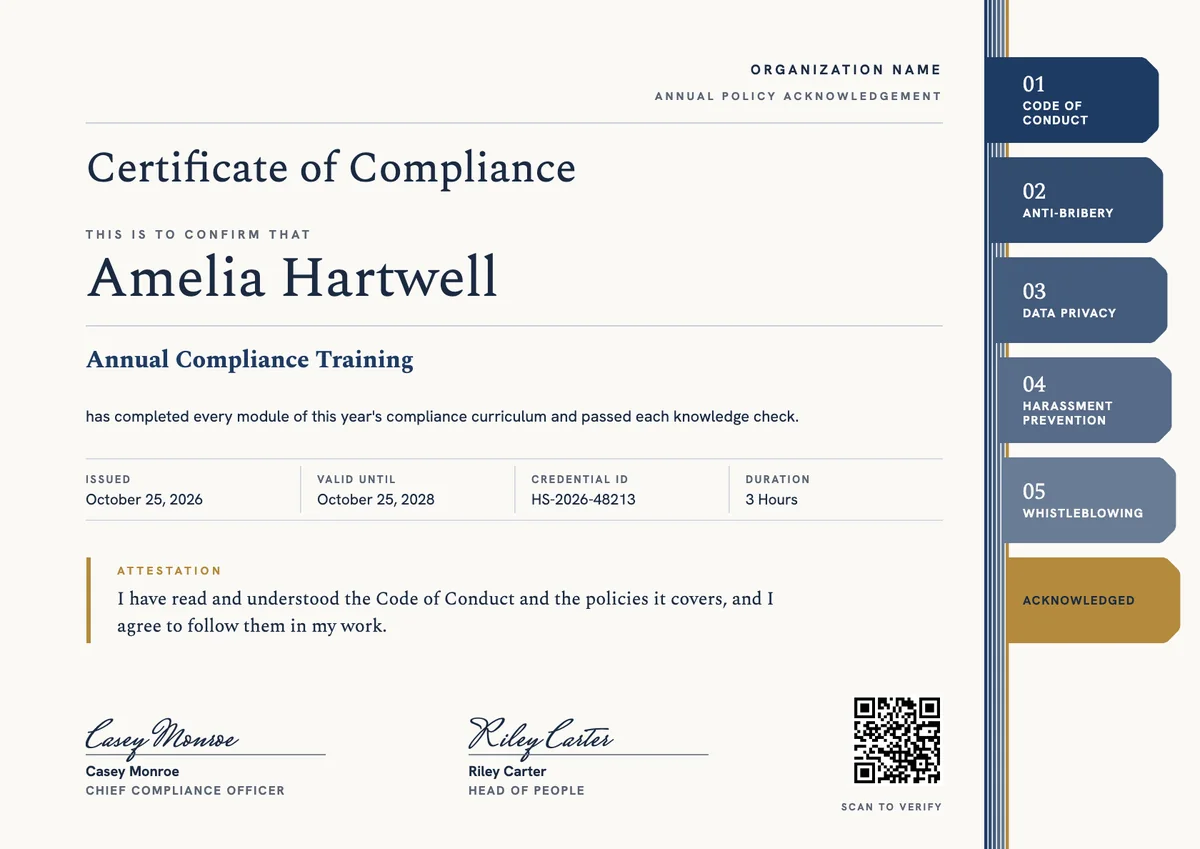
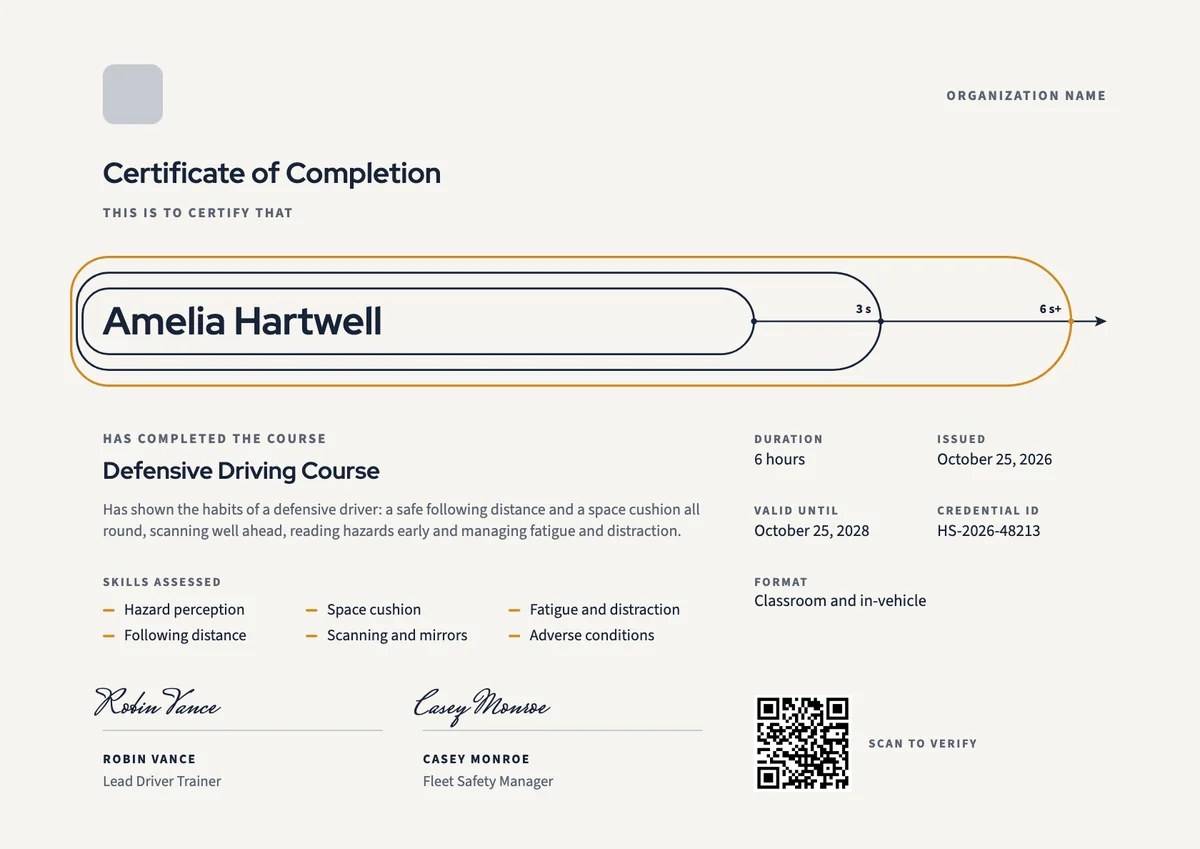
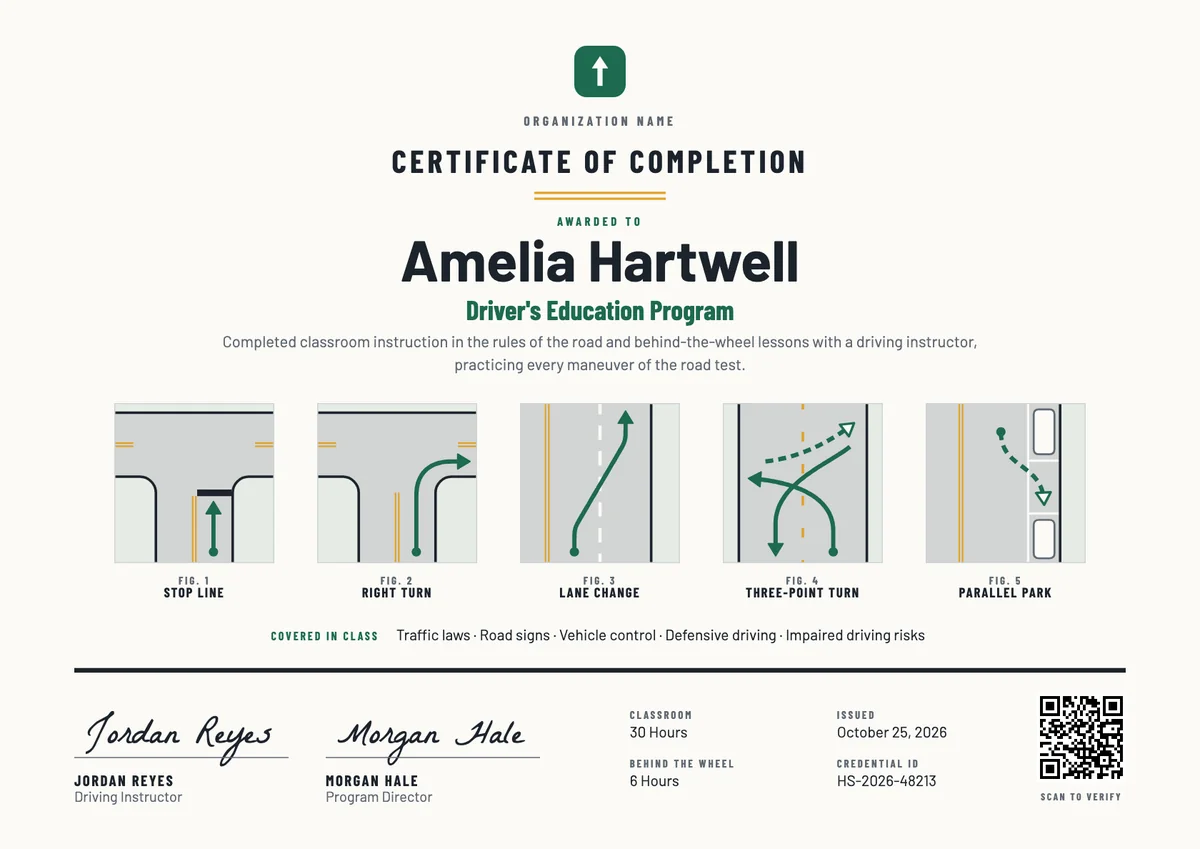
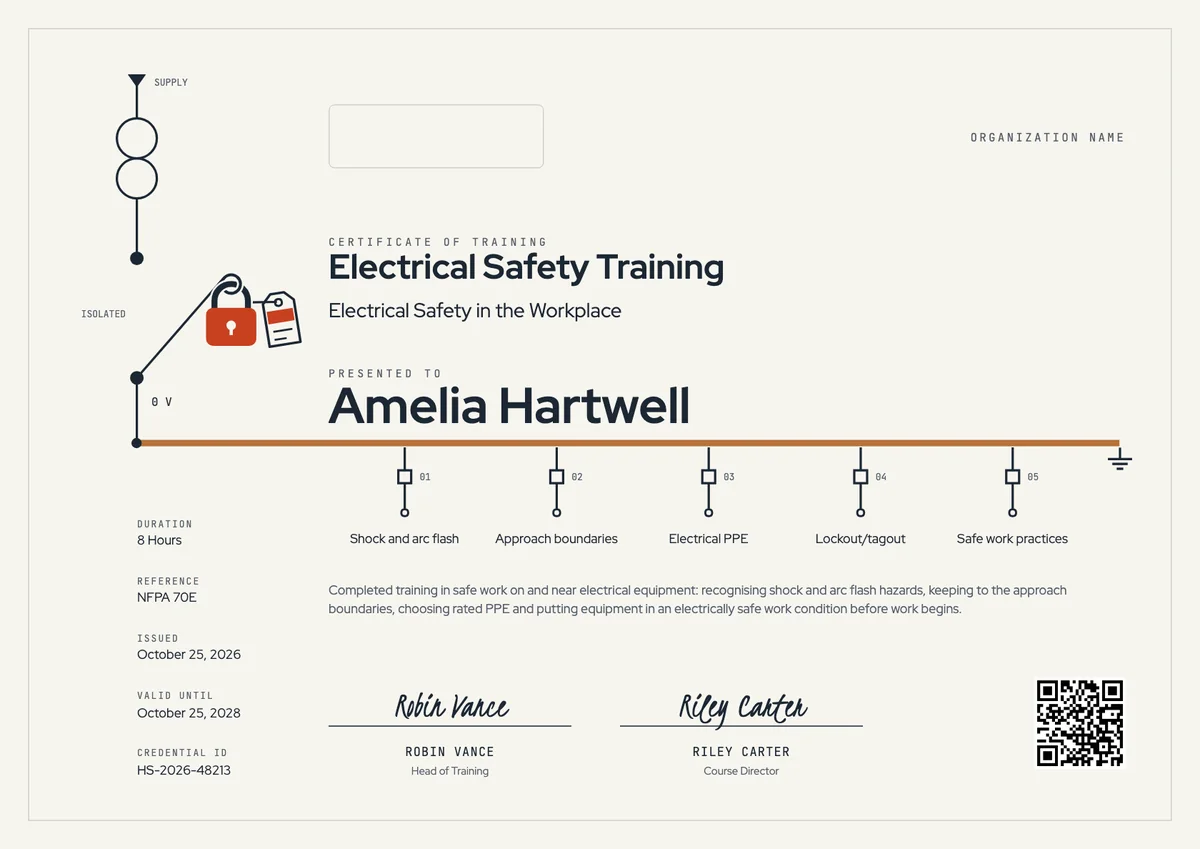
3 free designs. A set is one design as a badge, a landscape or a portrait certificate, or all three.
Free for up to 20 recipients a year
Manhole Section set
Badge · Landscape · Portrait

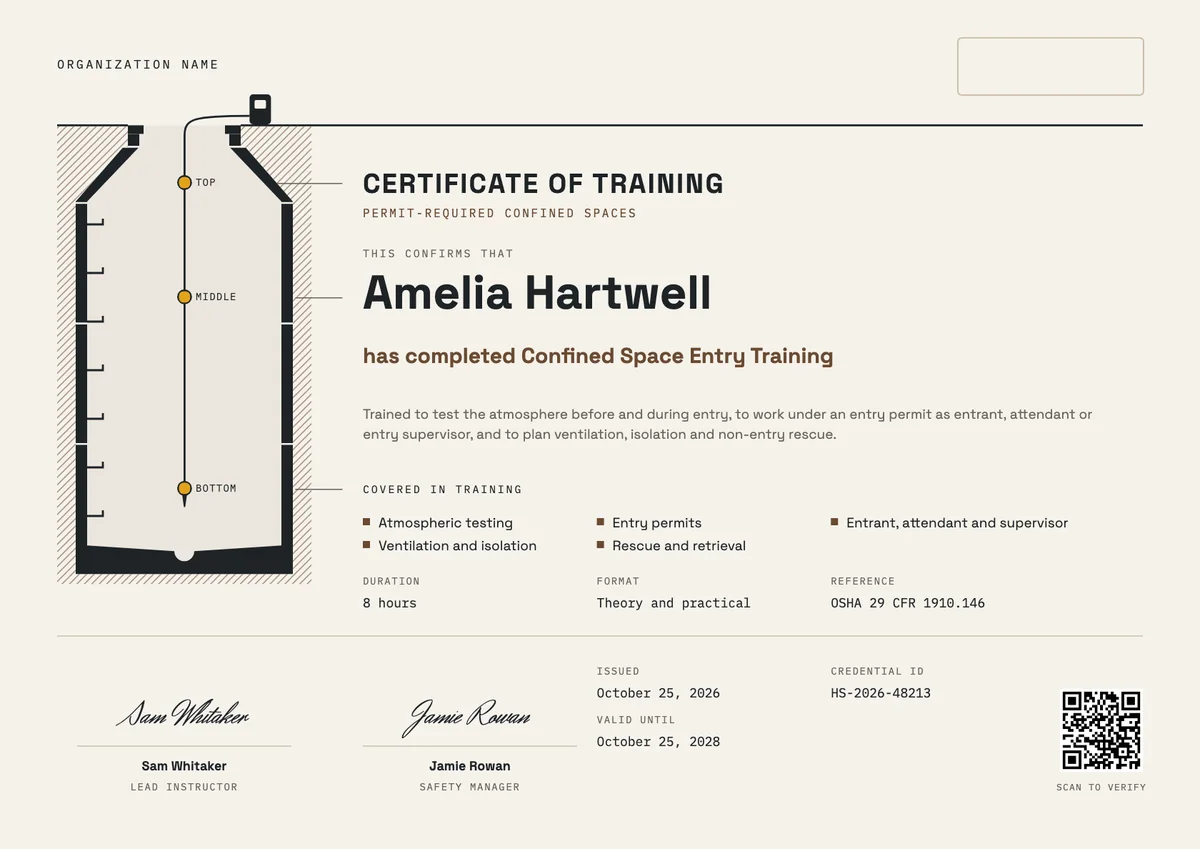
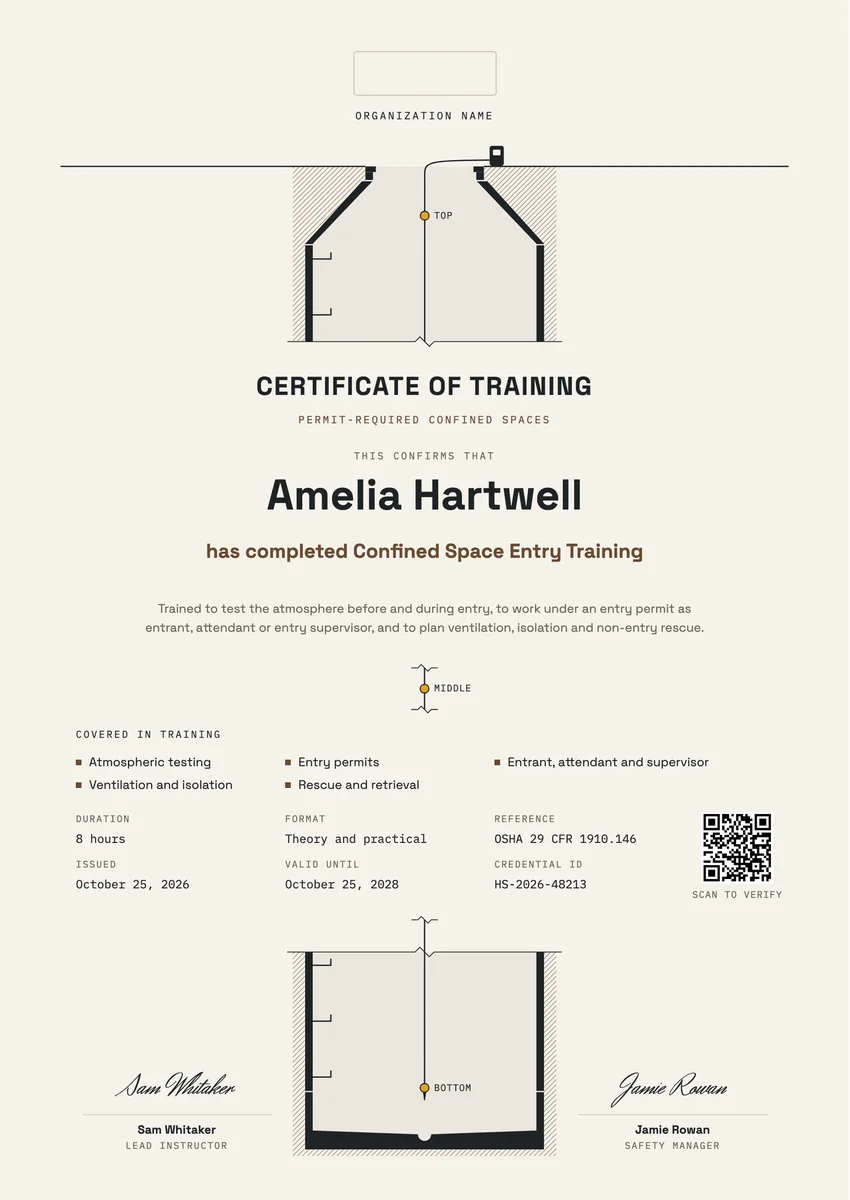
A confined space certificate template gives an employer or a training provider a clear record that a worker has finished confined space training. Utilities, water companies, manufacturers, shipyards, farms and contractors give one to the people who enter tanks, silos, vaults, pits, sewers and manholes, and to those who stand watch outside, after the first course and after each refresher.
A good confined space entry training certificate names the worker, the course and who ran it. It says in one sentence what the person can now do and lists the core topics: testing the atmosphere before and during entry, the entry permit, the roles of entrant, attendant and entry supervisor, ventilation and isolation, and rescue planning. Add the duration, the issue date, a valid-until date and the instructor's signature. The certificate records training; it is not an entry permit or a licence.
The designs come as certificates in A4 and US Letter and as digital badges that workers can show on a profile or a contractor portal.
Wording
What to write on a confined space training certificate
Use these lines as they are, or as a start for your own. Every template comes with wording you can change in the studio.
Wording for a confined space entry training certificate
- “Has completed confined space entry training and can test the atmosphere before and during entry, work under an entry permit and plan for rescue.”
- “For completing confined space entry training, covering atmospheric testing, entry permits, ventilation, isolation and non-entry rescue.”
- “Has completed the confined space entry refresher course for this year.”
Wording for a confined space training certificate by role
- “Has completed confined space training for the role of authorised entrant.”
- “Has completed confined space attendant training and can monitor entrants, keep an accurate count and summon rescue without entering.”
- “Has completed entry supervisor training and can check conditions, authorise and cancel an entry permit, and confirm that rescue is ready.”
Short lines for the badge or the email
- “Confined space entry trained. Test first, ventilate, and keep watch outside.”
- “Trained to enter, trained to watch, trained to get everyone out.”
Why send it with Hyperstack
More than a PDF
Customize the template free. When it is ready, send it to everyone at once.
One design, every name
Upload a spreadsheet and Hyperstack makes a training certificate for each person on it, in one go.
Sent by email
Each recipient gets their own email and link. You see who opened it, downloaded it and shared it.
Anyone can verify it
The QR code opens a page that proves the certificate is real. Recipients add it to LinkedIn in one click.
FAQ
Questions, answered
A confined space is large enough for a person to enter, has a limited way in or out, and is not designed for someone to stay in. Under the US general industry rules it needs a permit when it also has a serious hazard, such as a hazardous atmosphere, material that could engulf a person, walls or a floor that slope inwards and could trap someone, or another danger like moving parts. The employer's own assessment decides which spaces on a site need a permit.
The entrant goes into the space, knows its hazards and leaves when told or when something seems wrong. The attendant stays outside the whole time, keeps count of who is inside, watches conditions, and calls for rescue without going in. The entry supervisor checks that the conditions on the permit are met, authorises the entry, and cancels the permit when the work ends or conditions change. Training should match the role a person will take.
Gases do not mix evenly in a closed space. Some are lighter than air and gather near the top, others are heavier and settle at the bottom, and a pocket can sit in between. Testing only at the opening can miss them, so the atmosphere is tested at several levels before anyone enters, and monitored while people are inside. Courses teach how to use and check the monitor your site uses.
No. The certificate records that a person finished a course. An entry permit is written for one entry into one space at one time: it lists the hazards, the tests, the people involved and the rescue arrangements, and the entry supervisor signs it. A trained worker still needs a valid permit, issued under the employer's own procedure, before each permit-required entry.
The US general industry standard ties retraining to events rather than a fixed date: a change in duties, a new hazard in a space, or signs that procedures are not being followed. Many employers and training providers also set a regular refresher, often every one to three years. Put the valid-until date that matches your own training policy on the certificate.
It should say how a person will be brought out without anyone else going in, for example with a harness and a retrieval line that the attendant can work from outside. Where entry rescue may be needed, name the trained rescue team, how they are called and how quickly they can reach the space, and practise the rescue. Untrained people who go in to help are often among the victims, so the plan is agreed before the entry, not during it.
Your next cohort deserves better than a PDF
Set up in minutes, send your first credentials today, and only pay once you grow past 20 recipients a year.
Or open a live sample credential