Anti-Money Laundering (AML) certificate templates and badges
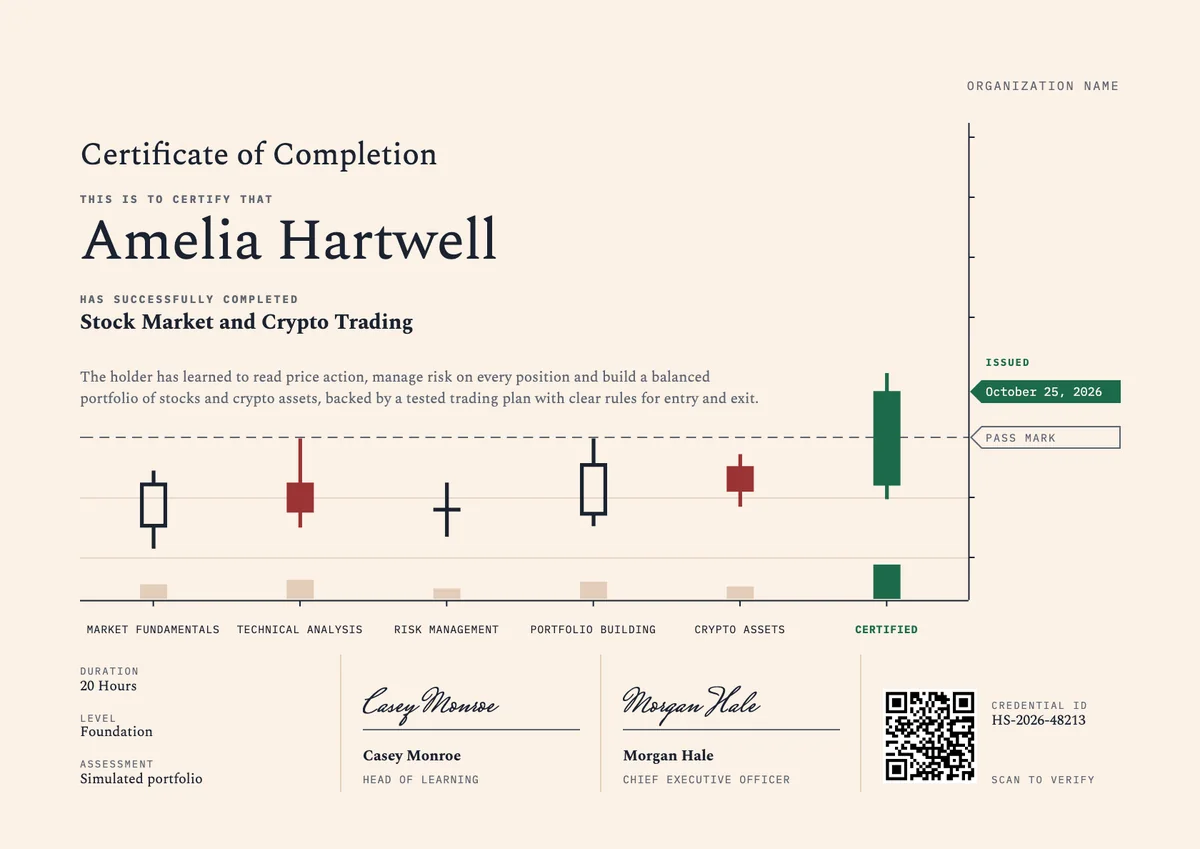
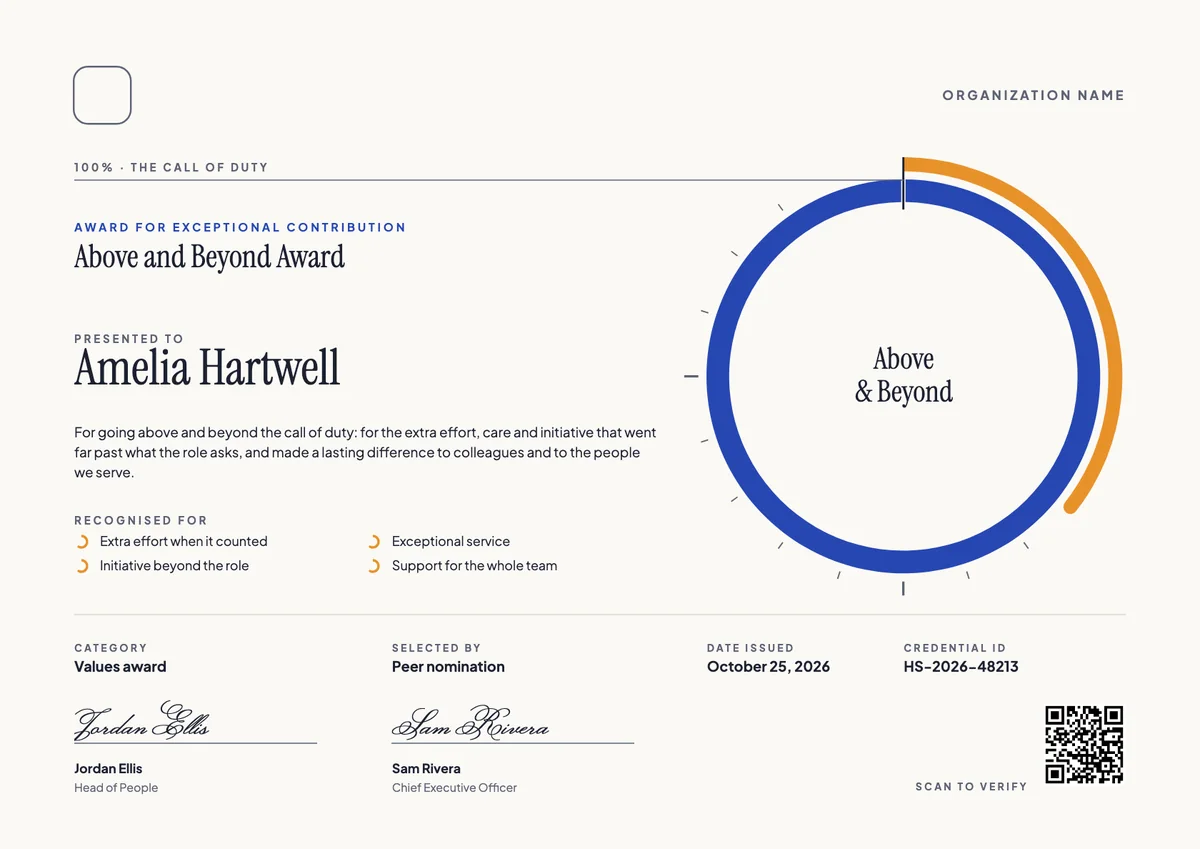
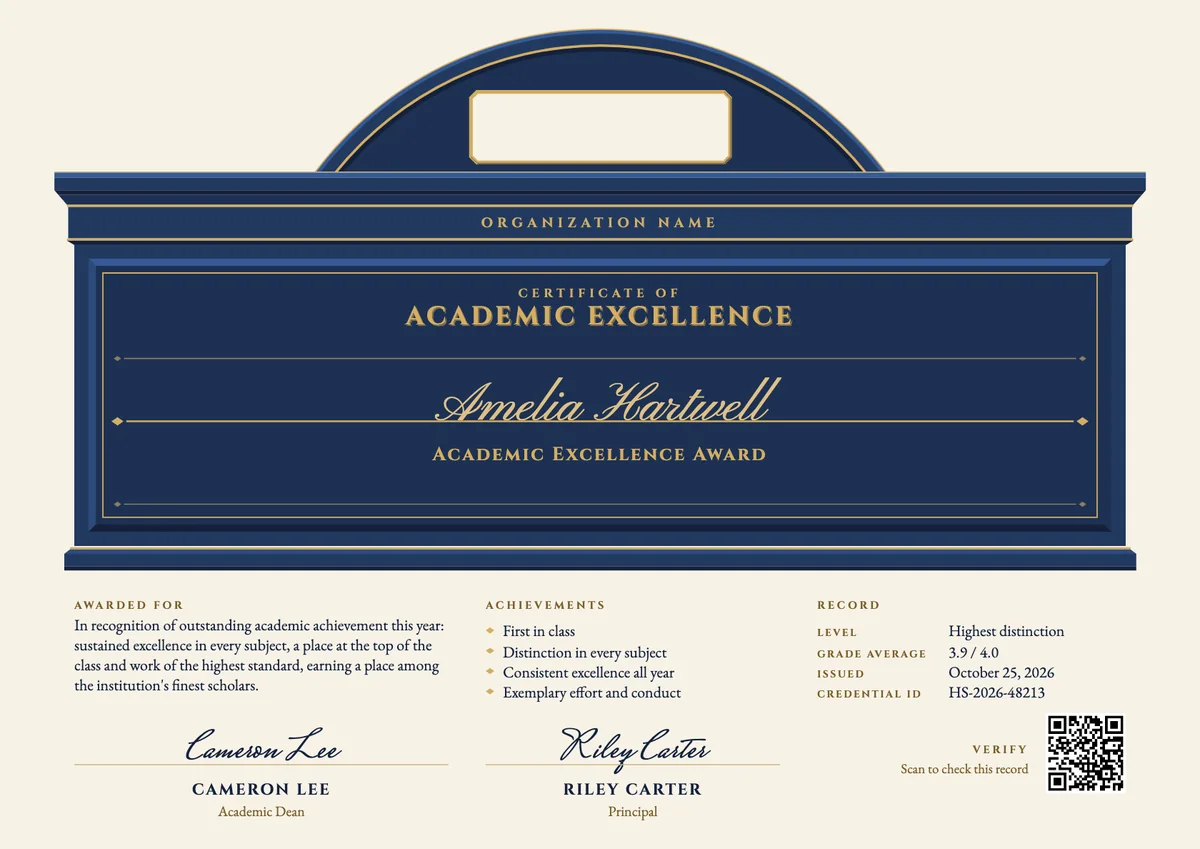
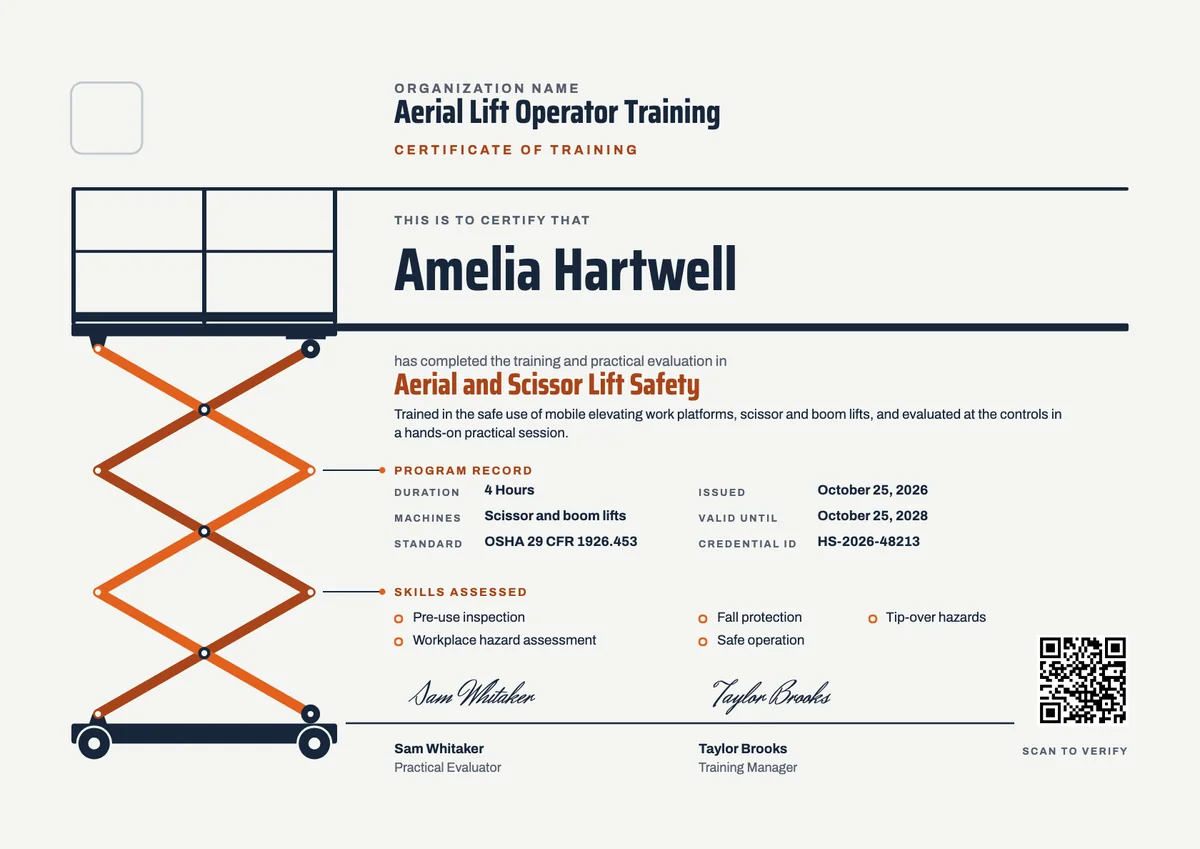
3 free designs. A set is one design as a badge, a landscape or a portrait certificate, or all three.
Free for up to 20 recipients a year
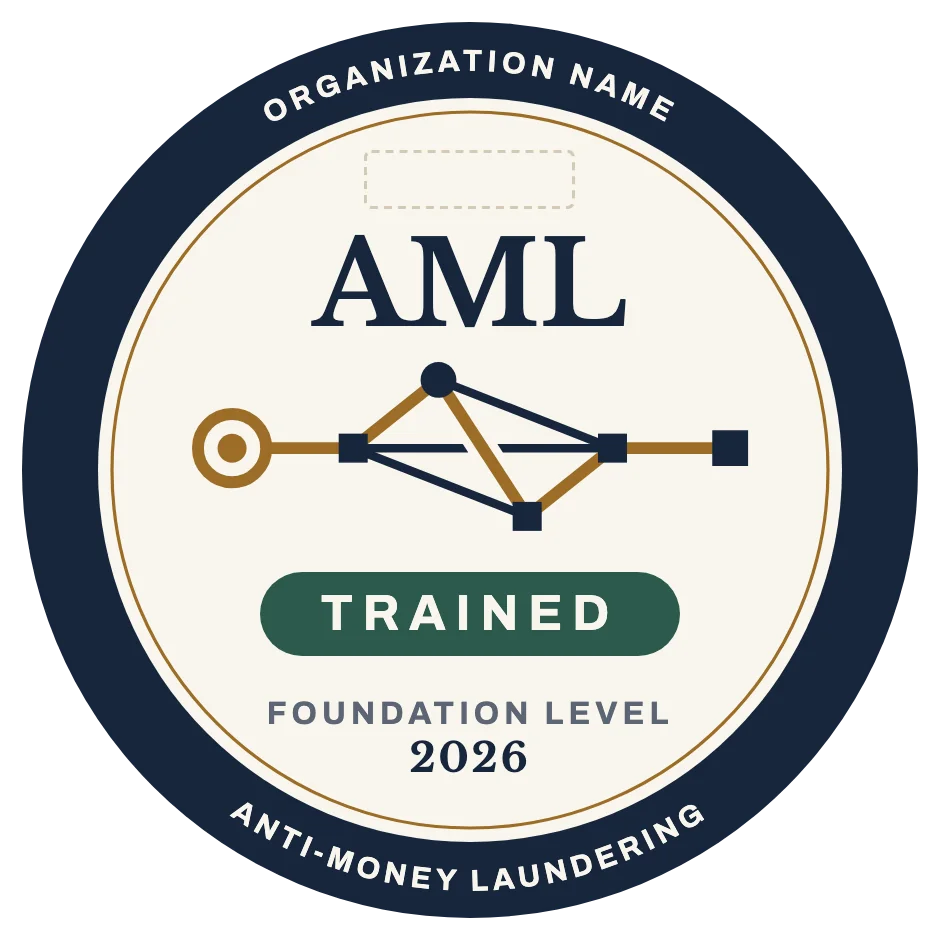
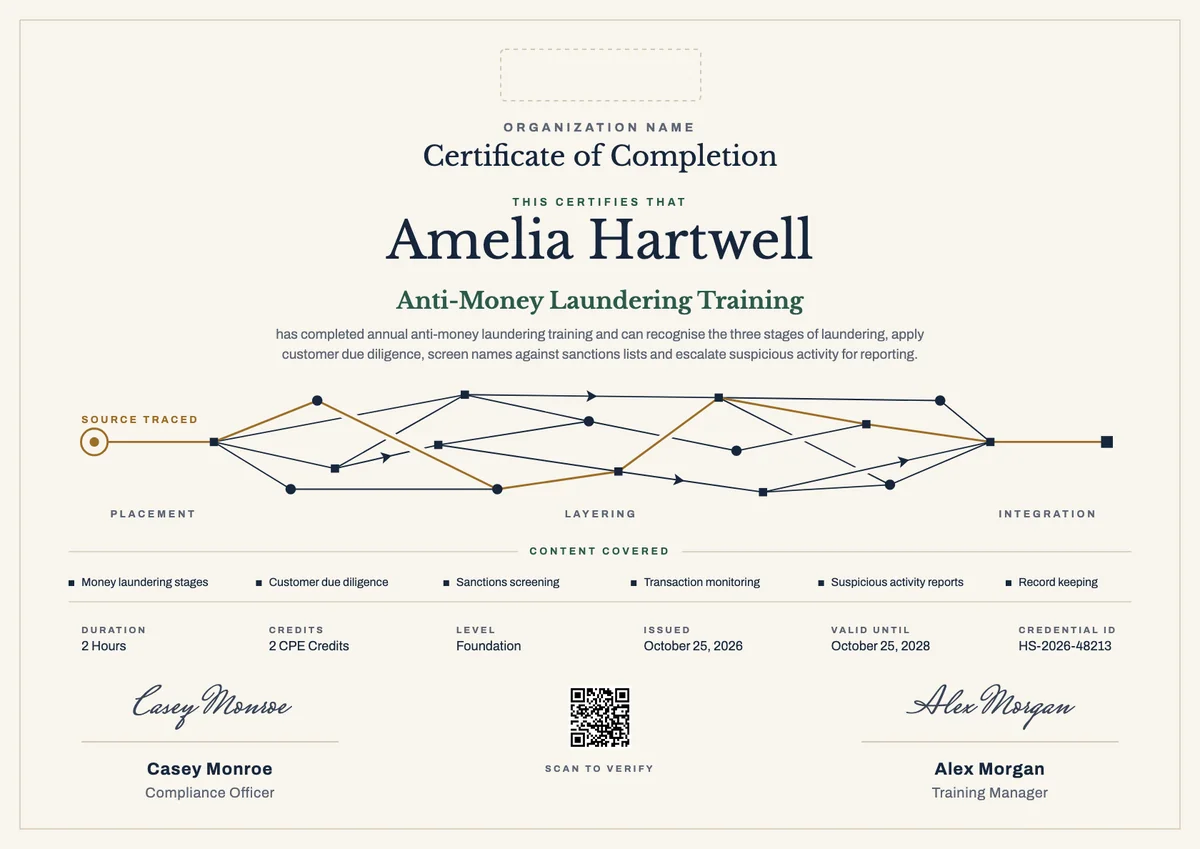
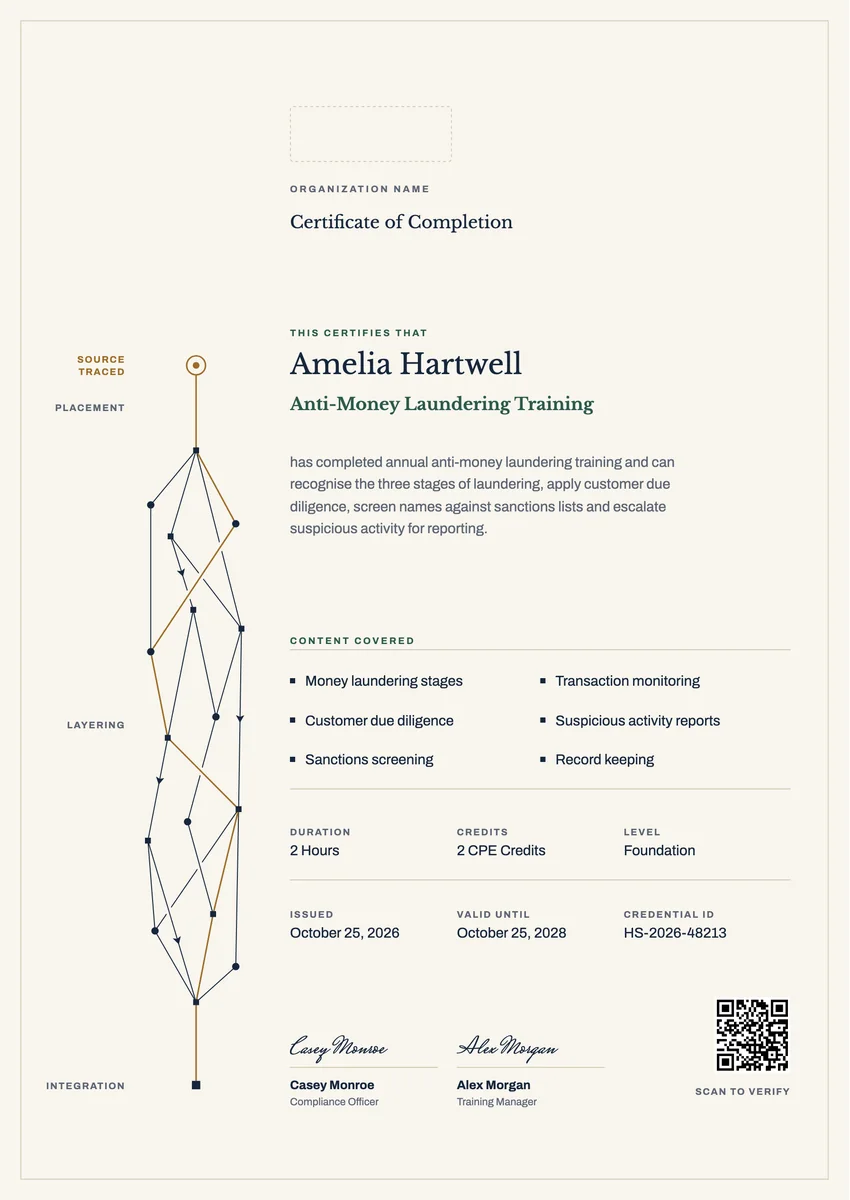
An AML certificate template gives compliance teams a ready record for anti-money laundering training. Banks, payment firms, insurers, casinos, accountants and other regulated businesses train their staff on money laundering risk, usually when they join and then every year, and they need proof of who completed it, when, and what it covered.
A good anti-money laundering training certificate names the employee and the course, lists the topics (customer due diligence, sanctions screening, suspicious activity reporting, record keeping), and carries the date, a credential ID and the signature of the compliance officer. Add the hours or CPE credits when the course earns them, and a valid-until date when the training must be renewed.
Each anti-money laundering certificate template here comes as a certificate in A4 and US Letter or as a digital badge, so the same record can go into the training file and onto a professional profile.
Wording
What to write on a anti-money laundering (aml) certificate
Use these lines as they are, or as a start for your own. Every template comes with wording you can change in the studio.
Wording for an annual AML training certificate
- “Has completed the annual anti-money laundering and counter-terrorist financing training required by our compliance program.”
- “For completing anti-money laundering training and demonstrating knowledge of the firm's reporting procedures.”
- “Has completed AML training covering the stages of money laundering, customer due diligence and the escalation of suspicious activity.”
Statements for KYC, sanctions and reporting modules
- “Can apply customer due diligence and enhanced due diligence to higher-risk customers.”
- “Has completed sanctions screening training and can resolve a potential name match.”
- “Knows how to recognise unusual activity and report it to the money laundering reporting officer.”
Short lines for the badge or the email
- “AML trained for the year ahead.”
- “Anti-money laundering training complete.”
Why send it with Hyperstack
More than a PDF
Customize the template free. When it is ready, send it to everyone at once.
One design, every name
Upload a spreadsheet and Hyperstack makes a training certificate for each person on it, in one go.
Sent by email
Each recipient gets their own email and link. You see who opened it, downloaded it and shared it.
Anyone can verify it
The QR code opens a page that proves the certificate is real. Recipients add it to LinkedIn in one click.
FAQ
Questions, answered
Most AML rules ask for ongoing training without fixing an exact interval. In practice firms train new staff before they deal with customers and everyone else once a year, with extra sessions when the rules, the products or the firm's risks change. A valid-until date one year after the course makes the next deadline clear.
Show them when the course is accredited for them. Accountants, auditors and many compliance professionals must log continuing education hours, and a certificate that states the hours or credits, the provider and the date is what they keep as evidence. For an internal course with no accreditation, give the duration instead.
Check your own regulator's rules. Many firms keep training records for at least five years, the same period the FATF Recommendations set for customer and transaction records, so they can show who was trained and when during an inspection.
Usually the money laundering reporting officer, the BSA officer or the head of compliance, because they own the AML program. When an outside provider runs the course, its trainer or director often signs as a second signatory.
Not always. A risk-based program gives tellers and onboarding staff the basics of red flags and escalation, while analysts, investigators and senior managers get deeper modules. Use the level and the skills on the certificate to show which course the person took.
No. A training certificate records that someone completed a course. Qualifications such as CAMS from ACAMS or the ICA diplomas are earned through exams and assessment. Many employees hold both: yearly training certificates and, for specialists, a professional qualification.
Your next cohort deserves better than a PDF
Set up in minutes, send your first credentials today, and only pay once you grow past 20 recipients a year.
Or open a live sample credential