Introduction: Why Credentials Need a Passport Too
Imagine if your passport only worked in your neighborhood. Sounds absurd, right? Yet, that is the reality of many digital credentials today. A certificate earned in may not be verifiable in Berlin, leaving learners stranded at the digital border.
The global conversation, led by UNESCO, the European Union, and a growing set of regional frameworks, is about fixing this.
The mission is simple: build interoperable credentialing systems that carry across borders, employers, and industries. Digital badges and certificates are no longer just shiny tokens for learners to pin on LinkedIn; they are the new currency of professional mobility.
Platforms like Hyperstack are stepping into this moment, aligning credentials with international standards so they move as freely as people do. In the next wave of recognition, credentials need passports too, and global standards are the customs officers making sure they travel smoothly.
What Do Global Standards in Digital Credentials Actually Mean?
Global standards are the international agreements that turn credentials into more than local souvenirs. Think of them as the Rosetta Stone for digital learning: they ensure that a credential issued in one country can be read, verified, and trusted in another.
At their core, these standards guarantee that every credential carries consistent metadata. Metadata is the behind-the-scenes detail: who issued it, when, for what skills, and how it can be verified.
Without that structure, each system would use its own dialect, and interoperability would collapse. With standards in place, credentials can move across LMS platforms, credentialing systems, and even into CRM integrations without friction.
The real goal is portability. Institutions align with these frameworks not only for compliance but also for competitive advantage. A diploma or micro-credential that can be trusted across borders enhances institutional credibility and attracts global learners.
Hyperstack builds this directly into its platform, embedding metadata aligned with Open Badges 3.0 and the W3C Verifiable Credentials framework, so credentials are never stuck in a single walled garden.
How Are UNESCO and EU Frameworks Shaping the Future of Recognition?
Two heavyweight players are driving much of today’s interoperability push: UNESCO and the European Union.
UNESCO has been championing lifelong learning for decades, but in recent years, it has made micro-credentials a cornerstone of its strategy. Through initiatives like the Global Convention on the Recognition of Qualifications concerning Higher Education, UNESCO is pushing for learning that is modular, portable, and stackable.
It wants credentials from short courses and nonformal learning environments to carry weight alongside traditional degrees, because economies and labor markets now demand flexibility.
Meanwhile, the EU’s Europass Digital Credentials Infrastructure (EDCI) is creating a model where credentials can be issued in one member state and instantly verified in another. This reduces administrative headaches for institutions and employers and allows learners to prove their qualifications with a single click.
It is not just convenience; it is transparency and trust at scale.
Together, these frameworks act like the international treaty for credentials. They reduce guesswork, streamline verification, and raise the bar for what counts as proof of learning. Platforms like Hyperstack are designed to align with these frameworks so institutions can meet international recognition requirements without building everything from scratch. If you'd like to explore how this would work for you, click here to schedule a free demo.
Why Do Global Standards Matter for Institutions and Learners?
For learners, the answer is simple: opportunity. A credential that only works within one country is like a phone charger with the wrong plug. Learners need credentials that plug into job markets, education systems, and industries globally. Standards ensure that a certificate earned in D.C. carries weight in Dublin.
For institutions, standards are both a credibility booster and a growth engine. When credentials meet global protocols, institutions enhance their brand reputation, improve student recruitment, and increase employer trust.
Employers want verifiable proof of skills, not a digital sticker with no metadata.
Students want credentials that help them cross borders and advance careers, not just decorate their CV. In practice, global standards are a win-win. They motivate learners by giving achievements real-world value and position institutions as globally competitive.
Hyperstack’s commitment to embedding standardized metadata and global compatibility means institutions can deliver on these expectations without reinventing the wheel.
What Role Does Metadata Play in International Portability?
Metadata is the credential’s passport information. It includes the issuer’s identity, the date of issue, the skills or competencies recognized, and the criteria for earning it. Without it, a badge is just an image file that’s nice to look at but meaningless to employers or institutions outside the issuing platform.
Standardized metadata ensures that credentials remain interpretable no matter where they travel. Open Badges 3.0 defines this structure so that when a credential moves from an LMS to a CRM or across borders, its meaning stays intact. Think of it as having your passport translated into every language at once.
Hyperstack takes this further by embedding rich metadata into each credential it issues. It aligns not only with Open Badges 3.0 but also with the W3C Verifiable Credentials model, which is quickly becoming the backbone of international portability. This guarantees that learners’ credentials do not lose meaning or trust when they cross digital frontiers.
The Push for International Recognition: UNESCO, EU, and Regional Initiatives
How UNESCO’s Lifelong Learning Agenda Influences Credential Policy
UNESCO’s agenda is not just about traditional degrees anymore. It recognizes that learning happens in workshops, short courses, online platforms, and workplace training. Micro-credentials have become central to its lifelong learning strategy. By recognizing nonformal and informal learning, UNESCO is encouraging institutions to validate the skills learners actually use in modern economies.
What the EU’s EDCI Teaches Us About Interoperability
The EU’s EDCI is a working example of credential interoperability in action. It allows credentials to be issued, shared, and automatically verified across all EU member states. That means a learner in Madrid can apply for a job in Munich and prove their qualification instantly. For institutions, it reduces the administrative overhead of verifying records and ensures compliance with EU mobility policies.
How Regional Policies Beyond Europe Factor In
Outside Europe, regions are moving at different speeds but in the same direction. Asia and Africa are piloting blockchain-backed credential registries, while Latin America is experimenting with national qualification frameworks that align with international standards. Rather than reinvent the wheel, many are leaning on global protocols like Open Badges 3.0.
Hyperstack gives institutions a practical advantage here by offering flexibility with APIs and global compatibility, so credentials align with both regional frameworks and international recognition.
LMS vs Credentialing Platforms Under Global Standards
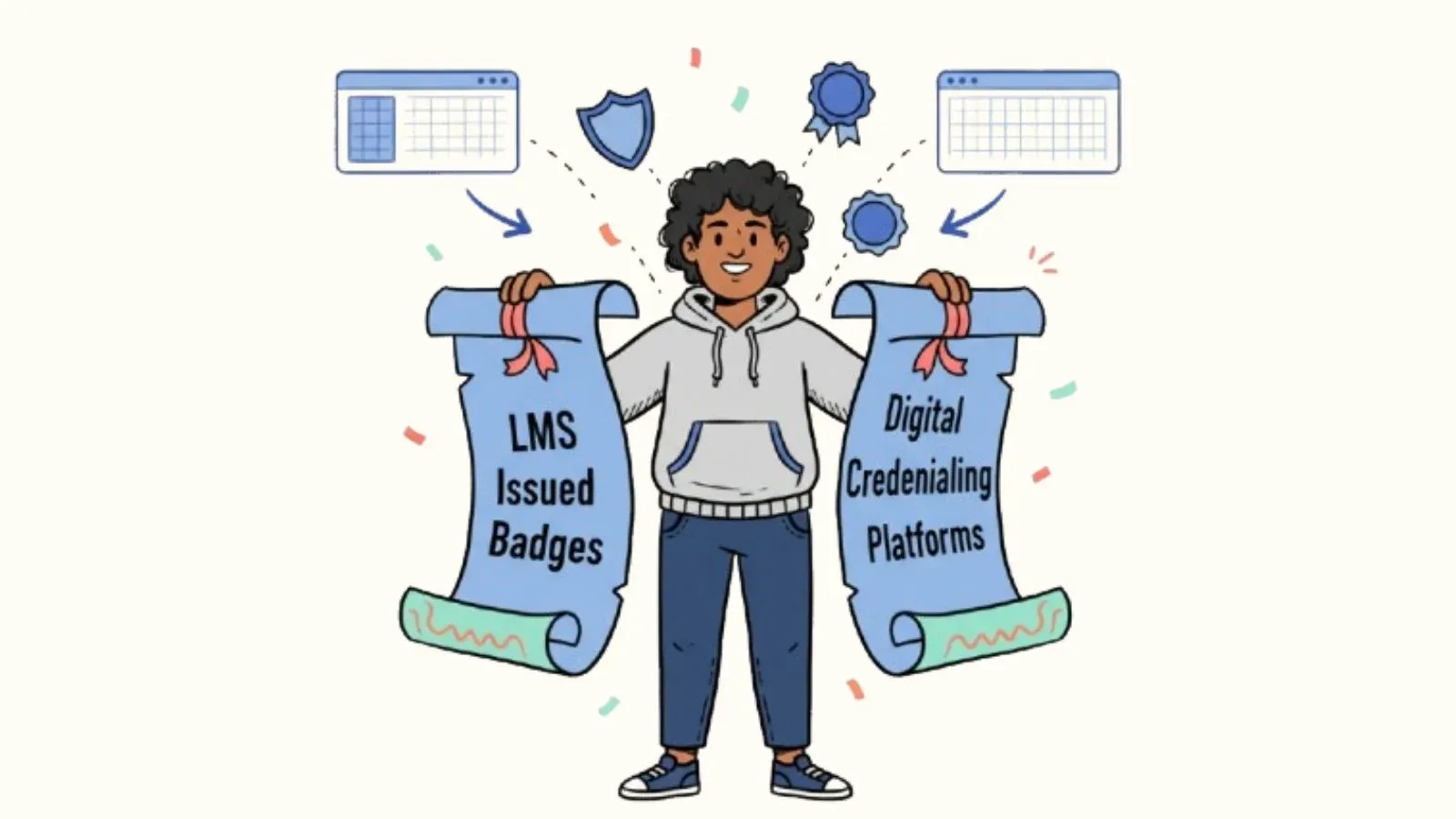
LMSs like Moodle, Canvas, and Blackboard are excellent teaching tools, but their badge systems are designed for internal motivation, not international recognition. These badges typically lack rich metadata, blockchain verification, or compatibility with frameworks like EDCI. They often stay locked within the LMS, like medals in a private trophy cabinet.
Credentialing platforms like Hyperstack, by contrast, issue credentials that are designed to travel. They include metadata, comply with global standards, and are compatible with LMS and CRM integrations. Institutions do not need to choose between teaching efficiency and international recognition. They can use their LMS for instruction and Hyperstack for credential issuance, ensuring every certificate has external value.
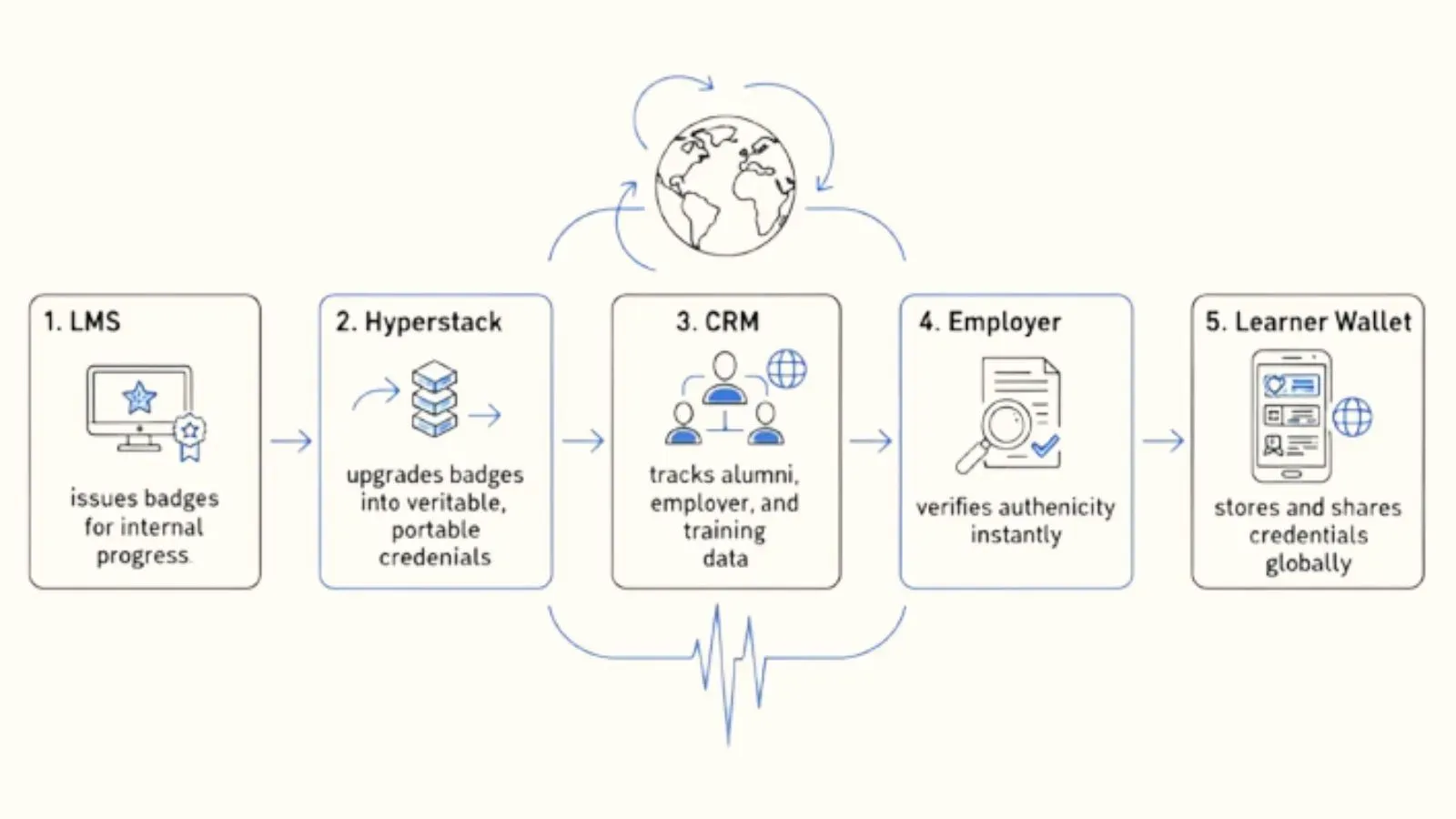
The hybrid model is often the most effective: learners earn small badges inside the LMS as motivation, while completing a program earns them a global-ready credential issued through Hyperstack. The result is both engagement during learning and recognition afterward.
The Trust Layer: Blockchain and Open Badges 3.0 at a Global Scale
Why Open Badges 3.0 Matters for Global Interoperability
Open Badges 3.0 ensures credentials are structured in a way that systems across the world can understand. It standardizes metadata so that a badge from one platform can be verified on another without confusion. Without it, credentials are like regional dialects, comprehensible only in their home system.
How Blockchain Builds Trust Across Borders
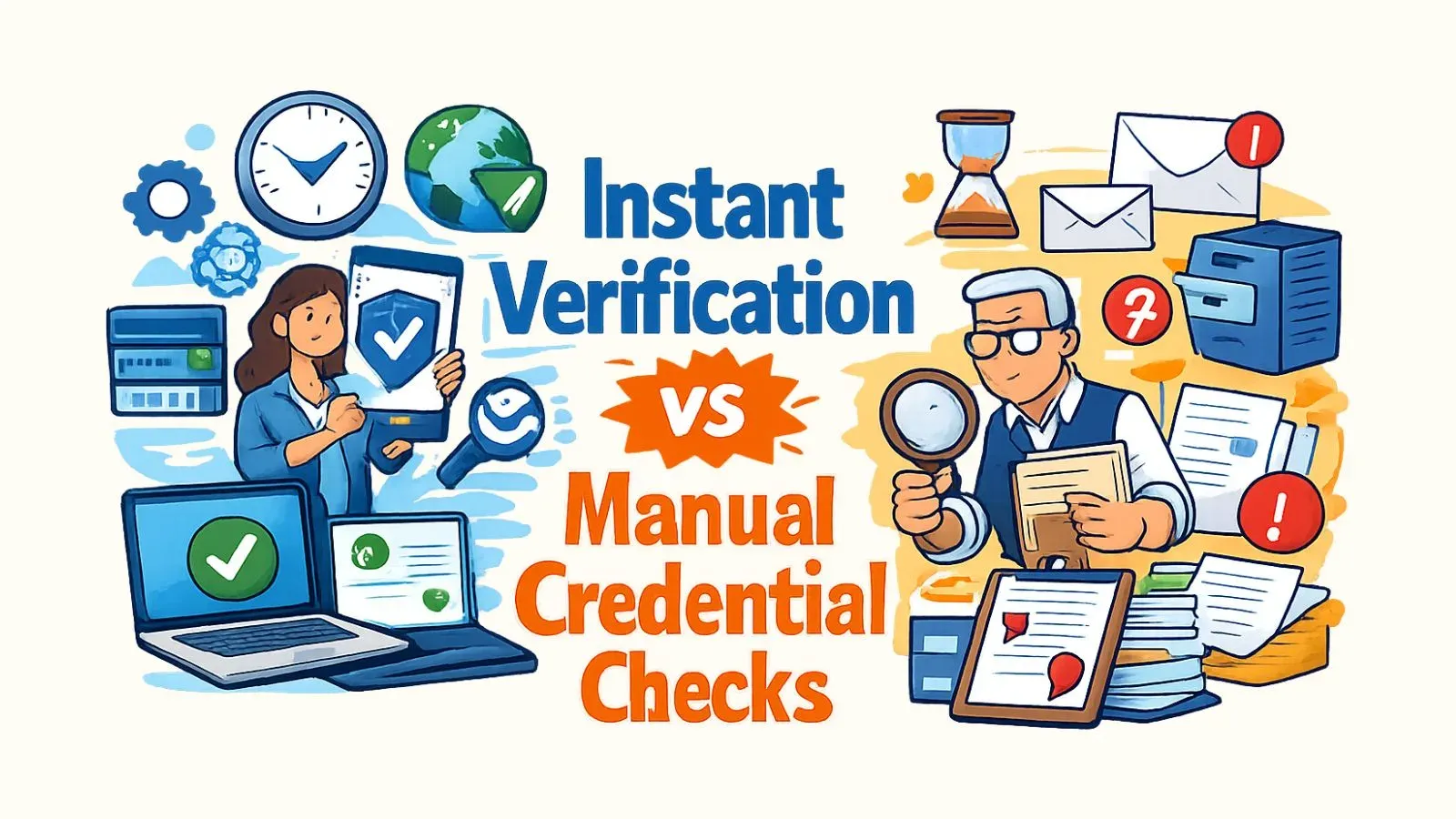
Blockchain provides the tamper-proof foundation. By recording credentials on a blockchain, institutions create immutable proof that the credential is authentic. This is critical in sectors like healthcare, finance, and compliance where the cost of fraud is high. Employers can verify credentials instantly, anywhere, without needing to call the issuing institution. Hyperstack integrates blockchain-backed credentialing to ensure this layer of trust is built into its ecosystem.
Are Employers Ready to Accept Blockchain-Backed Credentials Globally?
Adoption is growing. Employers in regulated industries are already demanding blockchain-backed verification as a safeguard against fraud. Resume fraud is rising, and blockchain offers a scalable solution to keep employers confident. While global acceptance is still maturing, blockchain is fast becoming a baseline expectation rather than an optional upgrade.
CRM Systems in International Credentialing Strategy
CRM systems like Salesforce, HubSpot, or Zoho manage the lifeblood of institutions: relationships with students, alumni, and employers. Yet many institutions overlook how credentials can enrich these systems.
When CRM and digital credential integration happens, the benefits are immediate. Alumni offices can see which graduates are upskilling and target them with advanced programs. Employer partnerships can be managed with live credential data, matching skilled graduates with job pipelines. Corporate training ROI can be tracked directly against verified skills.
Hyperstack integrates with CRMs to ensure that credentials are not isolated data points but living records tied to real relationships. Institutions that ignore this integration leave valuable insights on the table.
Portability, Digital Wallets, and Lifelong Learner Identity
Learners do not want to be tethered to a single platform. They want credentials they can carry across careers and continents. That is where digital wallets come in.
A digital wallet is like a universal vault for credentials, independent of any issuing institution. It ensures learners own their records and can share them instantly. No more scrambling for transcripts or dealing with institutional firewalls. With wallets aligned to global standards, learners are free to move credentials across employers, borders, and education systems.
Hyperstack supports this model by making sure every credential issued belongs to the learner first. The wallet becomes a central piece of the lifelong learning identity, and interoperability ensures it works everywhere. Institutions that adopt wallets and learner-owned credentials position themselves as future-proof, learner-first organizations.
The ROI of Global Recognition for Institutions
Why should institutions care about global standards? The answer is threefold: prestige, recruitment, and trust.
Institutions aligned with global frameworks attract international learners who want credentials that travel. They gain employer trust by issuing verifiable, portable qualifications. They also build institutional prestige by demonstrating compliance with international best practices. In recruitment terms, a certificate that carries beyond borders is a magnet for ambitious students.
The ROI goes beyond compliance. It translates into measurable growth. Institutions with interoperable credentialing systems reduce administrative friction, scale faster, and build long-term alumni loyalty. Hyperstack amplifies this by offering global-ready issuance at scale, making growth a natural outcome of recognition.
Building an Internationally Recognized Credential Ecosystem
Institutions looking to align with global standards need a roadmap.
The starting point is adopting Open Badges 3.0 and W3C Verifiable Credentials. These set the common language for metadata. For Europe, the EDCI is essential. Regional qualification frameworks add local compliance, but the underlying structure should always remain globally compatible.
APIs are the glue holding everything together. Without them, integrations break. With them, LMSs, CRMs, and credentialing platforms can evolve without creating silos. Hyperstack’s API-first architecture ensures credentials plug into global ecosystems without disruption.
Finally, stackable micro-credentials are essential. By allowing learners to combine smaller achievements into larger qualifications, institutions can support modular, lifelong learning that is recognized internationally. UNESCO has highlighted stackable credentials as a key driver of future workforce mobility, and platforms like Hyperstack make them easy to design and issue.
Closing Thought: Credentials Without Borders
If your credentials cannot cross borders, they’re digital souvenir pins. Institutions that adopt global standards give learners real passports: interoperable credentialing systems that open global doors.
Platforms like Hyperstack make this shift practical, ensuring credentials are portable, verifiable, and globally ready. In a world where careers cross time zones, credentials must too.
References
- Europass Digital Credentials Infrastructure (EDCI): ec.europa.eu
- European Commission on digital credentials: europass.europa.eu
- UNESCO on micro-credentials: unesco.org
- UNESCO IESALC on micro-credentials in global recognition: iesalc.unesco.org
- Brookings report on learner mobility: brookings.edu
- Biomed Central study on micro-credential principles: human-resources-health.biomedcentral.com
- “Trust Me If You Can”: blockchain credentials analysis: arxiv.org
Frequently asked questions
UNESCO and the European Union are setting the tone for global credentialing. UNESCO promotes micro-credentials and lifelong learning as part of its international agenda, while the EU’s Europass Digital Credentials Infrastructure (EDCI) allows credentials issued in one country to be instantly verified in another. Together, these frameworks push interoperability, reduce administrative burdens, and ensure that learning achievements carry value across borders. Institutions that align with these policies boost credibility and give learners credentials that can travel globally.
Global standards turn digital credentials into passports for opportunity. For learners, they ensure portability, so a certificate earned at home is recognized abroad. For institutions, compliance with standards builds international trust, attracts global students, and reassures employers that issued credentials are authentic. Without standards, credentials often remain locked inside local systems. With them, they gain universal meaning, becoming part of an interoperable credential ecosystem that benefits everyone involved.
Most LMS platforms like Moodle or Canvas can issue badges, but these are typically designed for internal motivation rather than international recognition. They often lack standardized metadata, blockchain verification, and compliance with frameworks such as Open Badges 3.0. That makes them less portable across borders or platforms. Credentialing platforms like Hyperstack bridge this gap by transforming LMS achievements into globally recognized credentials that meet international standards and can be shared with employers or academic institutions worldwide.
Blockchain creates tamper-proof, verifiable records of digital credentials. Once a credential is anchored to a blockchain, it cannot be altered without detection, making it highly secure. Employers and institutions can verify authenticity instantly, no matter where they are in the world. This level of trust is critical in industries where fraud carries serious risks, such as healthcare or finance. Platforms like Hyperstack use blockchain-backed credentials to deliver a layer of confidence and transparency that traditional badges cannot match.
Digital wallets give learners full control of their credentials, letting them store, carry, and share verified achievements anywhere. Instead of relying on paper transcripts or scattered institutional systems, learners can present credentials instantly to employers, universities, or licensing boards worldwide. Wallets also prevent vendor lock-in, ensuring ownership stays with the learner. This portability is essential for student mobility in today’s global workforce, and platforms like Hyperstack already support wallet-based credential sharing at scale.
Institutions do not need to abandon existing LMS or CRM systems to align with international credentialing standards. By adopting an API-first, standards-compliant platform like Hyperstack, they can issue credentials that meet frameworks such as Open Badges 3.0, W3C Verifiable Credentials, and EDCI. These platforms integrate seamlessly with existing tools, turning course completions or training milestones into credentials that are both portable and globally recognized. It is a cost-effective way to modernize credentialing without disrupting teaching and administration.
Hyperstack is designed around international compliance and interoperability, making it a strong choice for institutions aiming at global recognition. It supports blockchain-backed credentials, integrates with LMSs and CRMs, and aligns with UNESCO and EU standards. This ensures that every credential issued is portable, verifiable, and trusted by employers and academic partners worldwide. By using Hyperstack, institutions move beyond internal motivation tools and offer learners credentials that truly open doors across borders and industries.
Tags
- Global standards digital credentials
- Interoperability in digital credentials
- International recognition credentials
- Unesco digital credentials policy
- EU edci digital credentials
- Blockchain digital credentials
- Credential portability 2025
- Lifelong learning digital wallet
- Hyperstack digital credentials
- Credential verification global